

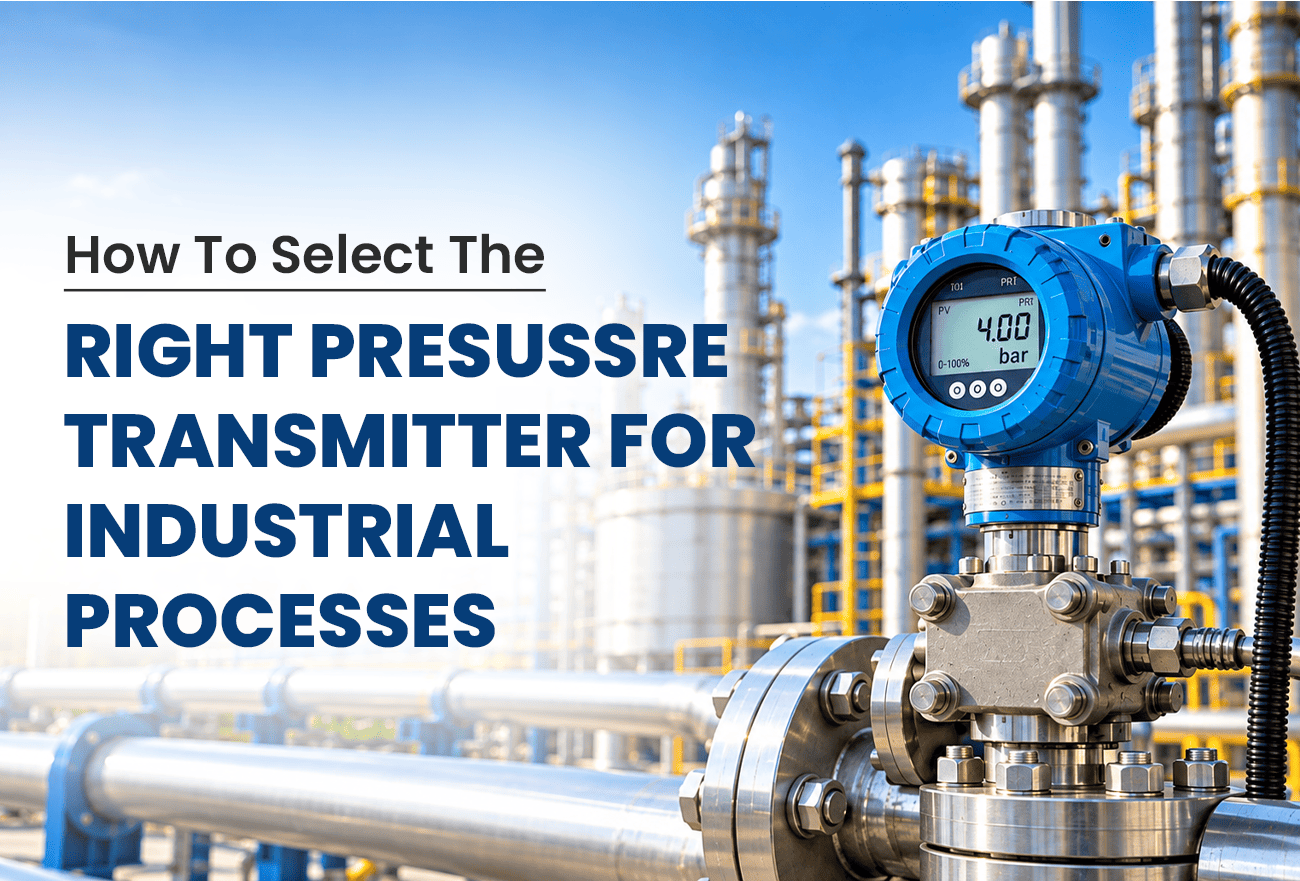
Pressure measurement plays an important role in keeping industrial processes safe, stable, and efficient. From manufacturing plants and chemical processing units to water treatment systems and HVAC installations, pressure needs to be monitored continuously and accurately.
This is where a pressure transmitter becomes useful. Unlike a traditional pressure gauge that provides a local reading, a transmitter converts pressure into an electrical signal that can be sent to a PLC, DCS, SCADA system, or other control equipment.
If the wrong transmitter is installed, the result could be inaccurate readings, frequent maintenance, process interruptions, or even equipment damage.
So, how do you select the right pressure transmitter for an industrial process?
Let’s look at the key factors.
What Is a Pressure Transmitter?
A pressure transmitter is an instrument that measures pressure and converts the measurement into an electrical output signal.
A typical industrial pressure transmitter includes a sensing element, electronics, and a process connection. The sensing element detects changes in pressure, while the electronics convert that information into a standardized output that can be interpreted by a control or monitoring system.
This makes pressure transmitters particularly useful where continuous pressure monitoring and remote measurement are required.
- Identify the Type of Pressure You Need to Measure
Before selecting a transmitter, determine what type of pressure measurement the process requires.
Common options include:
Gauge Pressure
Gauge pressure measures pressure relative to atmospheric pressure.
It is commonly used for applications such as compressed-air systems, pumps, pipelines, and process equipment.
Absolute Pressure
Absolute pressure is measured relative to a vacuum reference.
It can be useful in applications where atmospheric pressure variations need to be excluded from the measurement.
Differential Pressure
Differential pressure measures the difference between two pressure points.
It is commonly used for:
- Filter monitoring
- Flow measurement
- Level measurement
- HVAC systems
- Pump monitoring
- Process applications
Choosing the wrong pressure reference can result in readings that do not represent what the process actually needs.
- Check the Required Pressure Range
Pressure range is one of the first specifications to check.
Start by identifying:
- Normal operating pressure
- Minimum pressure
- Maximum expected pressure
- Possible pressure spikes
Do not select a transmitter simply because its maximum range appears to match the process.
For example, if a system normally operates around 5 bar but occasionally reaches 7 bar, a transmitter designed with an appropriate range and overload capability should be considered rather than selecting an instrument that operates continuously at its upper limit.
The goal is to achieve a useful measurement range while providing sufficient protection against unexpected pressure conditions.
- Consider the Process Medium
What is the transmitter actually measuring?
This question matters because water, oil, gases, steam, and chemicals can have very different effects on an instrument.
Check whether the transmitter’s wetted materials are compatible with the process medium.
For corrosive or aggressive fluids, material compatibility becomes especially important. In some applications, a diaphragm seal or specialized materials may also be required.
Always review the manufacturer’s technical specifications before selecting a transmitter for a chemically demanding process.
- Check the Operating Temperature
Temperature can affect pressure measurement and the performance of the transmitter.
You should consider both:
- Process temperature
- Ambient temperature
For example, a transmitter installed directly on a high-temperature process line may require a suitable installation arrangement or additional protection.
If the transmitter will be exposed to extreme temperatures, confirm the permitted temperature range in the manufacturer’s documentation.
- Choose the Right Accuracy
Accuracy requirements depend on the process.
A general utility monitoring application may not require the same accuracy as a critical process or measurement system.
Higher accuracy can be valuable where small pressure changes affect production quality, process control, or equipment performance.
However, choosing the highest possible accuracy for every application may unnecessarily increase cost.
The better approach is to determine how accurate the measurement actually needs to be and select accordingly.
- Select the Correct Output Signal
The transmitter must communicate with the equipment receiving its measurement.
Common industrial output options include standardized electrical signals such as 4–20 mA, while some applications may use digital communication protocols.
Before purchasing, check what the existing PLC, DCS, SCADA, or automation system supports.
For example, if a plant’s control system is designed to receive a 4–20 mA pressure signal, the transmitter should provide a compatible output.
Communication requirements should be confirmed before installation rather than after the instrument arrives.
- Check the Process Connection
The process connection determines how the transmitter connects to the equipment or pipeline.
Check:
- Thread type
- Connection size
- Mounting arrangement
- Material
- Pressure rating
- Installation orientation
A transmitter with the correct pressure range but an incompatible connection can still create installation problems.
It is therefore worth confirming the existing connection before ordering.
- Consider the Installation Environment
Industrial environments can be harsh.
A transmitter may be exposed to:
- Vibration
- Dust
- Moisture
- Corrosive gases
- Outdoor weather
- Electromagnetic interference
- Mechanical shock
Consider the enclosure and protection requirements for the location.
An instrument installed inside a clean control room will have different environmental requirements from one mounted outdoors beside heavy machinery.
- Think About Overpressure Protection
Unexpected pressure spikes can occur in industrial processes.
For this reason, check the transmitter’s allowable overpressure and burst-pressure specifications.
This is particularly important for systems where pressure fluctuations, pump starts and stops, valve operation, or process disturbances can produce sudden pressure changes.
Proper pressure protection can help extend instrument life and reduce the risk of measurement failure.
- Consider Maintenance and Calibration
Selecting a transmitter should not end with installation.
Think about how the instrument will be inspected, tested, calibrated, and replaced during its service life.
For critical applications, establish an appropriate calibration and verification schedule based on the process, required accuracy, operating conditions, and applicable quality procedures.
It is also useful to maintain records of calibration and maintenance activities.
These records can help identify performance trends and support quality and compliance requirements.
Pressure Transmitter Selection Checklist
Before purchasing a pressure transmitter, confirm:
- Pressure type: Gauge, absolute, or differential
- Pressure range: Normal and maximum expected pressure
- Process medium: Gas, liquid, steam, chemical, etc.
- Accuracy: Required measurement accuracy
- Temperature: Process and ambient temperature
- Output: 4–20 mA or required communication protocol
- Process connection: Size and type
- Environment: Indoor, outdoor, vibration, dust, moisture
- Overpressure: Expected pressure spikes and instrument limits
- Maintenance: Calibration and inspection requirements
Final Thoughts
Selecting the right pressure transmitter for industrial processes requires looking at the complete application rather than focusing on one specification.
Pressure range is important, but it is only one part of the decision. The pressure type, process medium, temperature, accuracy, output signal, connection, environment, and overpressure conditions all influence whether a transmitter is suitable.
A good selection process starts with understanding the actual operating conditions. From there, compare the requirements with the manufacturer’s technical specifications and installation recommendations.
When the instrument matches the process, pressure data becomes more reliable, maintenance can be easier to manage, and the control system gets the information it needs to operate effectively.
Frequently Asked Questions
- What is a pressure transmitter used for?
A pressure transmitter measures pressure and converts it into an electrical signal that can be sent to equipment such as a PLC, DCS, or SCADA system. It is commonly used for continuous and remote pressure monitoring in industrial processes.
- How do I choose the pressure range of a transmitter?
Consider the normal operating pressure, minimum and maximum expected pressure, and possible pressure spikes. The selected range should provide useful measurement resolution while remaining suitable for the process conditions and expected pressure levels.
- What is the difference between a pressure gauge and a pressure transmitter?
A pressure gauge normally provides a local visual pressure reading, while a pressure transmitter converts pressure into an electrical signal for remote monitoring or process control. The choice depends on the application’s measurement and control requirements.
- Why is the process medium important when selecting a pressure transmitter?
The process medium comes into contact with the transmitter’s wetted components. Different fluids and gases can have different chemical and physical properties, so material compatibility must be checked to help prevent corrosion, leakage, or instrument damage.
- How often should a pressure transmitter be calibrated?
There is no universal calibration interval. It depends on the application, operating conditions, required accuracy, manufacturer’s recommendations, and company quality procedures. Critical processes may require more frequent verification than general monitoring applications.

This is exactly what i was looking for, thank you so much for these tutorials
It would be great to try this theme for my businesses
This is exactly what i was looking for, thank you so much for these tutorials
It would be great to try this theme for my businesses